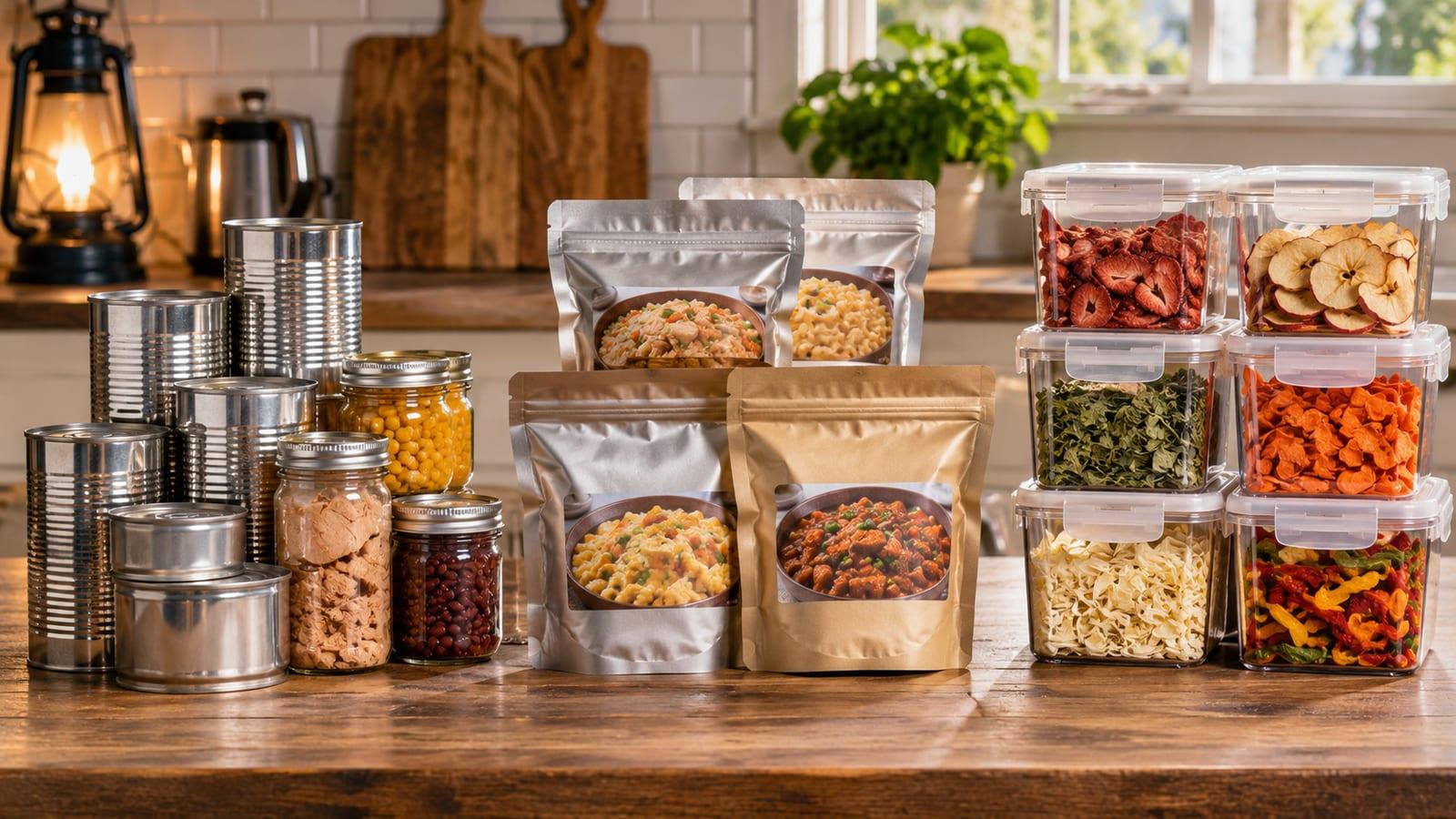
Shop for emergency food and you will soon meet three kinds: cans, dehydrated food and freeze-dried food.
All three are ways of keeping food without a refrigerator. This guide explains each one in plain terms, compares them on the points that matter in an emergency, and says which to buy first.
Canned food
Canning uses heat and a sealed container. The USDA's National Agricultural Library describes it this way: "During canning, food is preserved through heat processing and storage in sealed airtight containers."
What it does well. Canned food is ready as it is. Ready.gov notes that commercially canned food may be eaten out of the can without warming. It also brings its own liquid. The CDC lists liquid from canned fruit and vegetables as a source of clean water inside the home.
The trade-offs. That liquid makes cans heavy. You need a manual can opener, which Ready.gov includes on its list. And a damaged can has to be thrown away.
How long it keeps. A FEMA and American Red Cross booklet gives a general guideline for canned fruits, fruit juices, vegetables and condensed soups: use within one year, or before the date indicated on the label. The booklet dates from 2004, so go by the label where it gives a date.
Dehydrated food
Dehydrated food is dried food. The National Agricultural Library's thesaurus lists "dehydrated foods" as another name for "dried foods".
An FDA guidance document for food makers calls dehydration one of the oldest methods of food preservation. It says dried products are usually considered shelf stable, and so are often stored and distributed unrefrigerated. Its examples are milk powders, powdered beverages, pasta, and dried peas and beans.
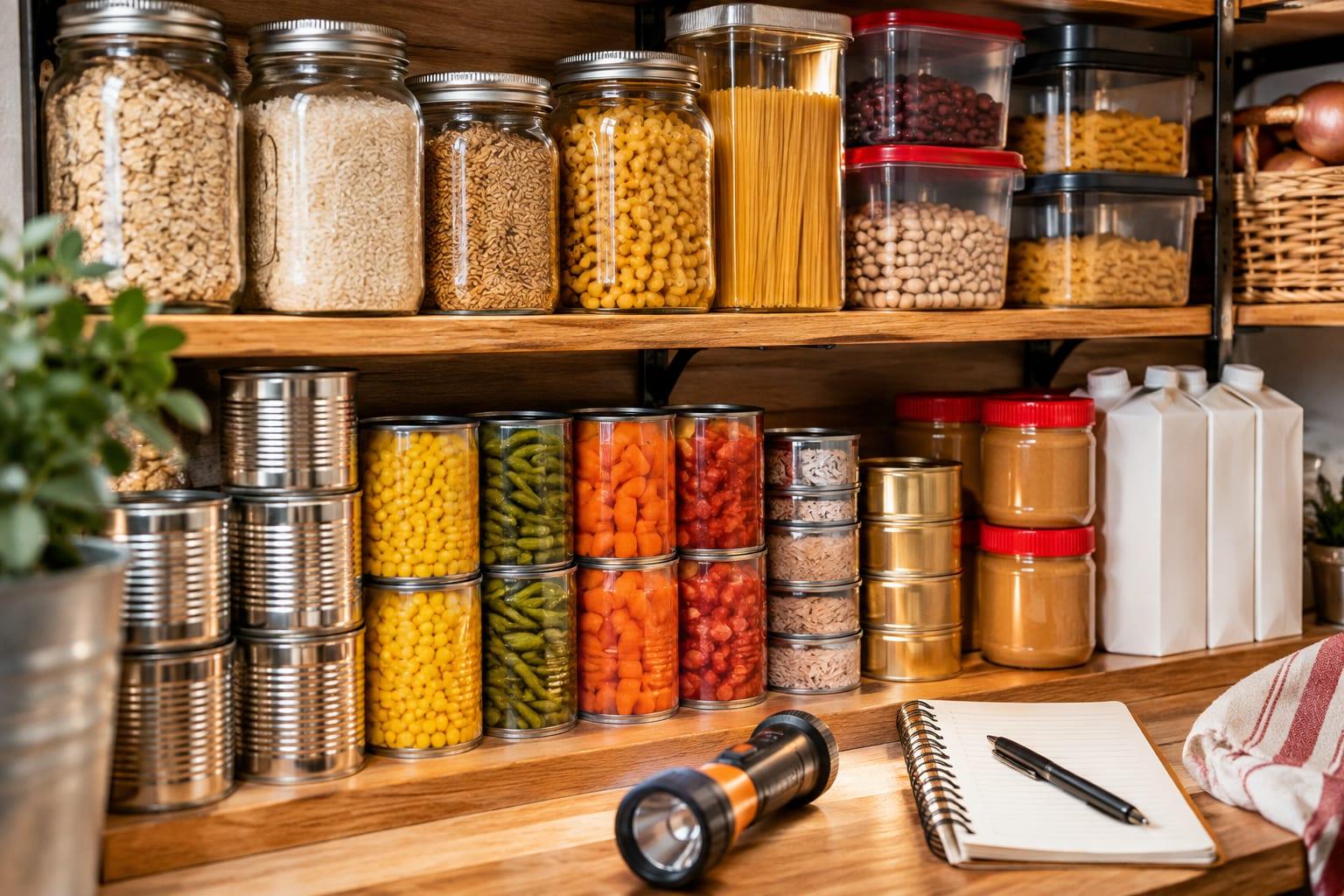
So you probably already own dehydrated food. Pasta, dried beans and powdered milk all count, and so does dried fruit.
What it does well. With the water removed, dried food is light and easy to carry home. Some of it is ready to eat, such as dried fruit, which is on Ready.gov's food list.
The trade-offs. Much of it needs water, heat or both. Pasta and dried beans have to be cooked. "Instant" foods are quicker, but still need water. The thesaurus definition of instant foods reads: "Foods in dried form that are ready to eat with the addition of water."
How long it keeps. It depends on the food. The FEMA booklet's general guidelines say to use boxed powdered milk, dried fruit and dry, crisp crackers within six months. It lists dry pasta and dried corn among foods that may be stored indefinitely, in proper containers and conditions.
Dried food has to stay dry. The FDA document tells food makers to choose packaging that will prevent the product from taking on water again. At home, Ready.gov says to store boxed food in tightly closed plastic or metal containers.
Freeze-dried food
Freeze-drying is a kind of drying. The FDA document lists it as one of the three main dehydration methods used in the United States, along with forced air drying and spray drying.
The difference is that the food is frozen first. The National Agricultural Library's thesaurus has a one-line definition of freeze drying: "The evaporation of water from a frozen product with the aid of high vacuum." A USDA Climate Hubs case study describes the equipment as chilling food to subfreezing temperatures, then removing the ice crystals without heat.
What it does well. Like other dried food, it is light, because the water is gone. The same case study says freeze-dried crops can be placed in water to retake their original form.
The trade-offs. If the directions call for water, it has to come from your stored supply. Freeze-drying also needs special equipment. We could not find an official source that compares prices, so we will not rank these foods by cost. Compare the price per serving on the shelf before you decide.
How long it keeps. You will see very long shelf-life figures on freeze-dried food. Treat them as manufacturers' claims. We could not find a federal food safety page that gives a shelf-life figure for freeze-dried food, so we are not printing one. Go by the date and the storage directions on the package.
What to look for: a printed date, clear directions that say how much water each serving needs, packaging that is sealed against moisture, and food your family already likes. Buy a small amount and try it before you buy more.
The trade-offs, side by side
- Water to prepare: canned food needs none. Dehydrated food ranges from none to a full pot. Freeze-dried food often needs water added back.
- Weight: cans are the heaviest, because the liquid is still inside. Dehydrated and freeze-dried foods are lighter.
- Storage space: we found no official comparison. In plain terms, cans are rigid and stack on a shelf. Dry foods in bags and boxes need a sealed container around them.
- How long it keeps: for canned and dried groceries, check the date on the label and the FEMA booklet's general guidelines. For freeze-dried food, the long figures are the makers' own.
- Cost: we do not print prices we cannot source. Canned and dried groceries are already on your shopping list, so you can add them one item at a time.
Which should a beginner start with?
Start with canned food and the dried groceries you already eat.
That matches the official advice. Ready.gov says to stock canned foods, dry mixes and other staples that do not require refrigeration, cooking, water or special preparation, and to choose foods your family will eat. Its suggested list is ready-to-eat canned meats, fruits and vegetables, plus cupboard foods such as peanut butter, dry cereal and dried fruit.
Freeze-dried food is optional. It makes the most sense where weight matters, such as in a bag you may have to carry. Our guide to 72-hour emergency bags covers that. Even then, count the water it needs.
A sensible order for most households:
- Canned and ready-to-eat food for a few days.
- Dried staples you already cook, with extra water to prepare them.
- Freeze-dried food later, if you have a specific use for it.
Our guide to building a 14-day pantry shows how to turn the first two into a plan.
Keep all of it safe
Whatever you store, the basics are the same. Ready.gov says to keep canned food in a cool, dry place. The FDA says a "use by" date is the manufacturer's recommendation for the best flavor or quality, and is not a food safety date. It also says to check canned goods for damage.
What to do this week
- Count the canned and dried food already in your cupboards.
- Buy a few extra cans of food your family already eats on your next grocery trip.
- Check every can, and throw out any that are leaking, bulging, swollen or damaged.
- Read the water directions on any dried or freeze-dried food before you buy it.
- Move opened boxes and bags into containers that close tightly.
- Write the date on what you store, and use the oldest first.
Where to go next
- Build a 14-Day Emergency Pantry With Foods You Already Eat
- How Much Emergency Water Does Your Family Actually Need?
- How to Start Prepping on $25, $50, or $100 a Month
- 72-Hour Emergency Bags: What Beginners Really Need
Sources
- Ready.gov: Food
- Ready.gov: Build a Kit
- FEMA and American Red Cross: Food and Water in an Emergency (FEMA 477, August 2004)
- USDA National Agricultural Library: How Did We Can?
- USDA National Agricultural Library Thesaurus: freeze drying
- USDA National Agricultural Library Thesaurus: dried foods
- USDA National Agricultural Library Thesaurus: instant foods
- USDA Climate Hubs: Freeze Drying Crops for Increased Climate Change Resilience in New Mexico (case study)
- FDA: Draft Guidance for Industry, Preventive Controls for Human Food, Chapter 4
- FDA: Are You Storing Food Safely?
- CDC: Home-Canned Foods
- CDC: How to Find Clean Water in an Emergency