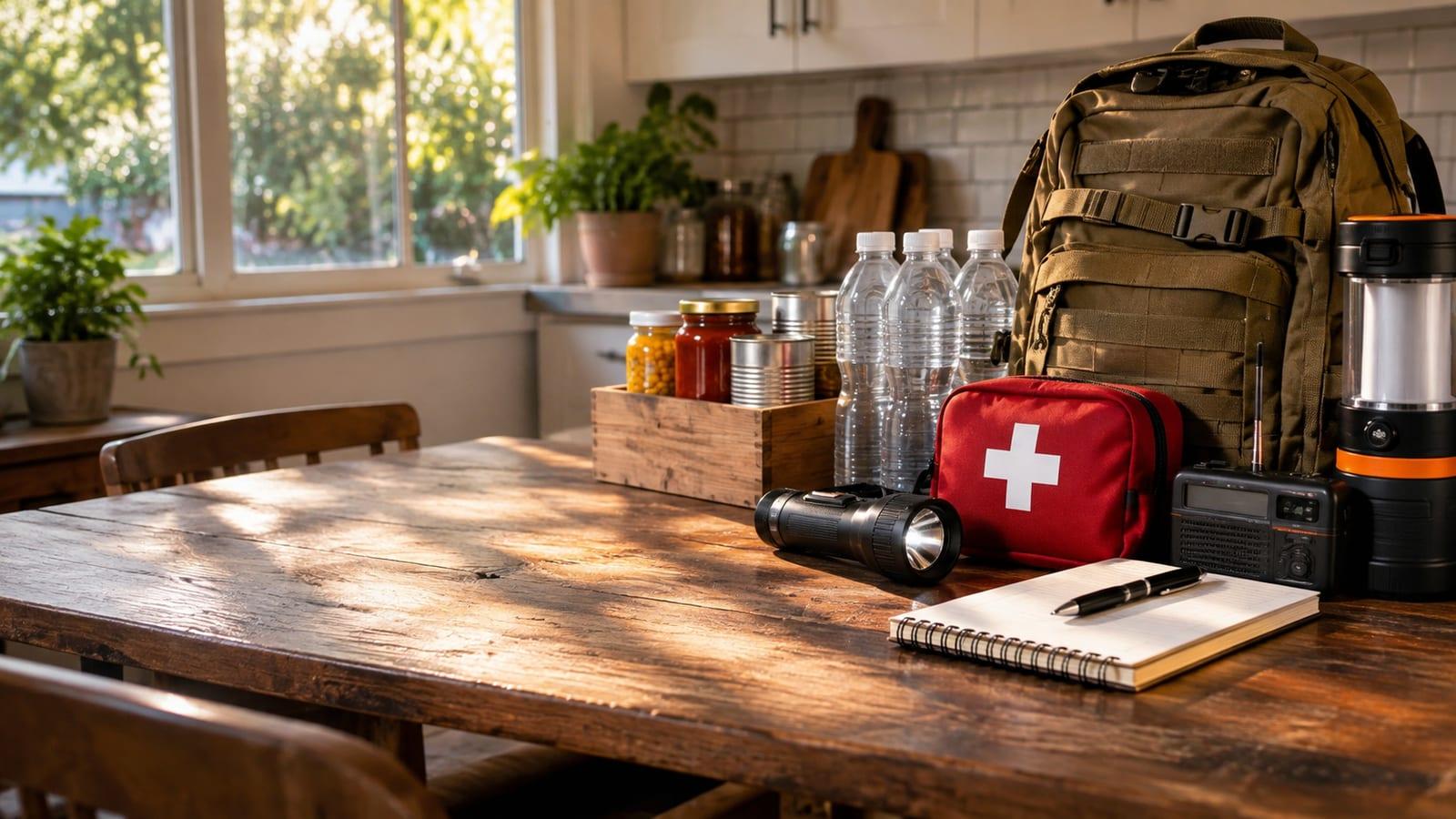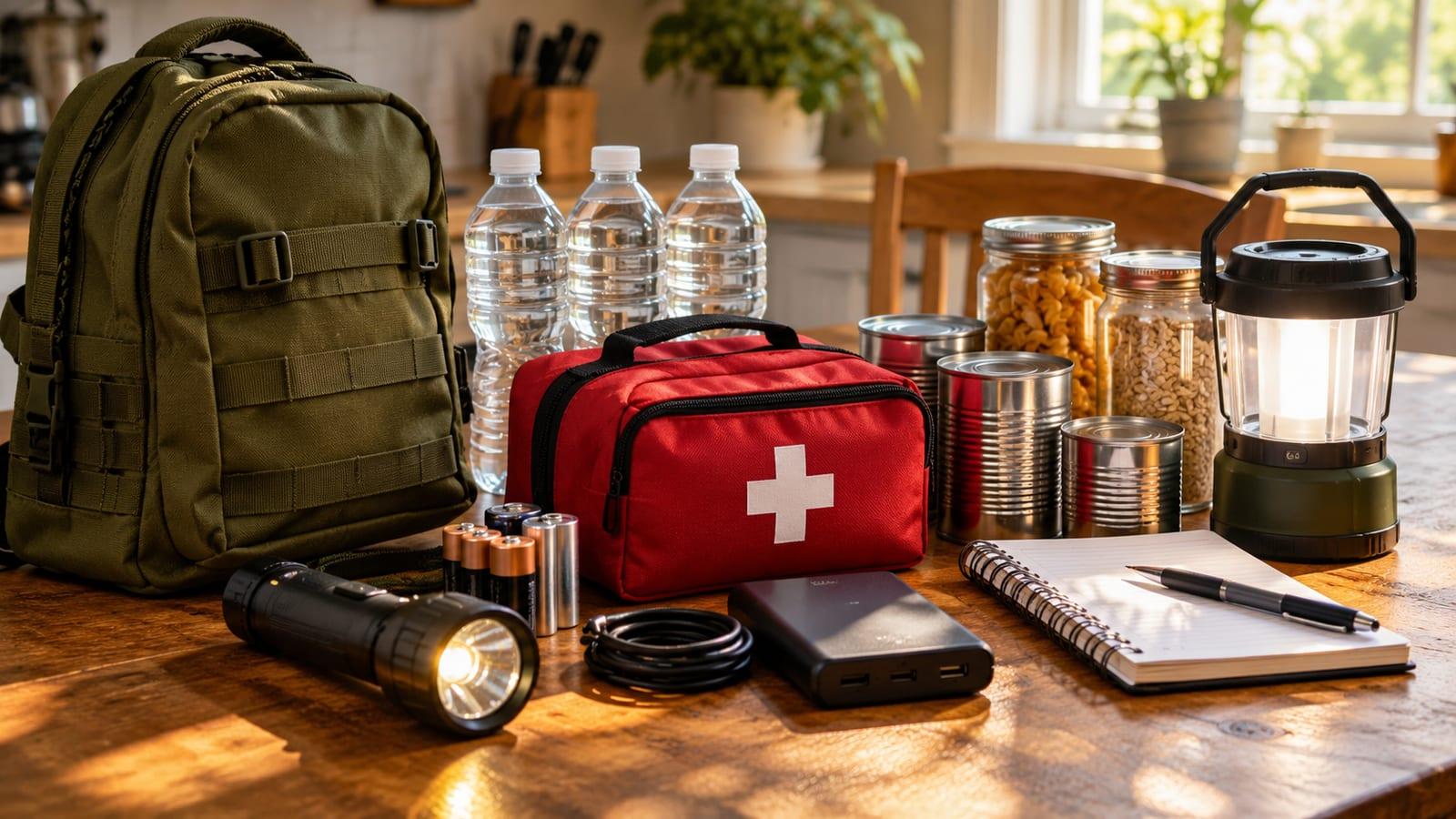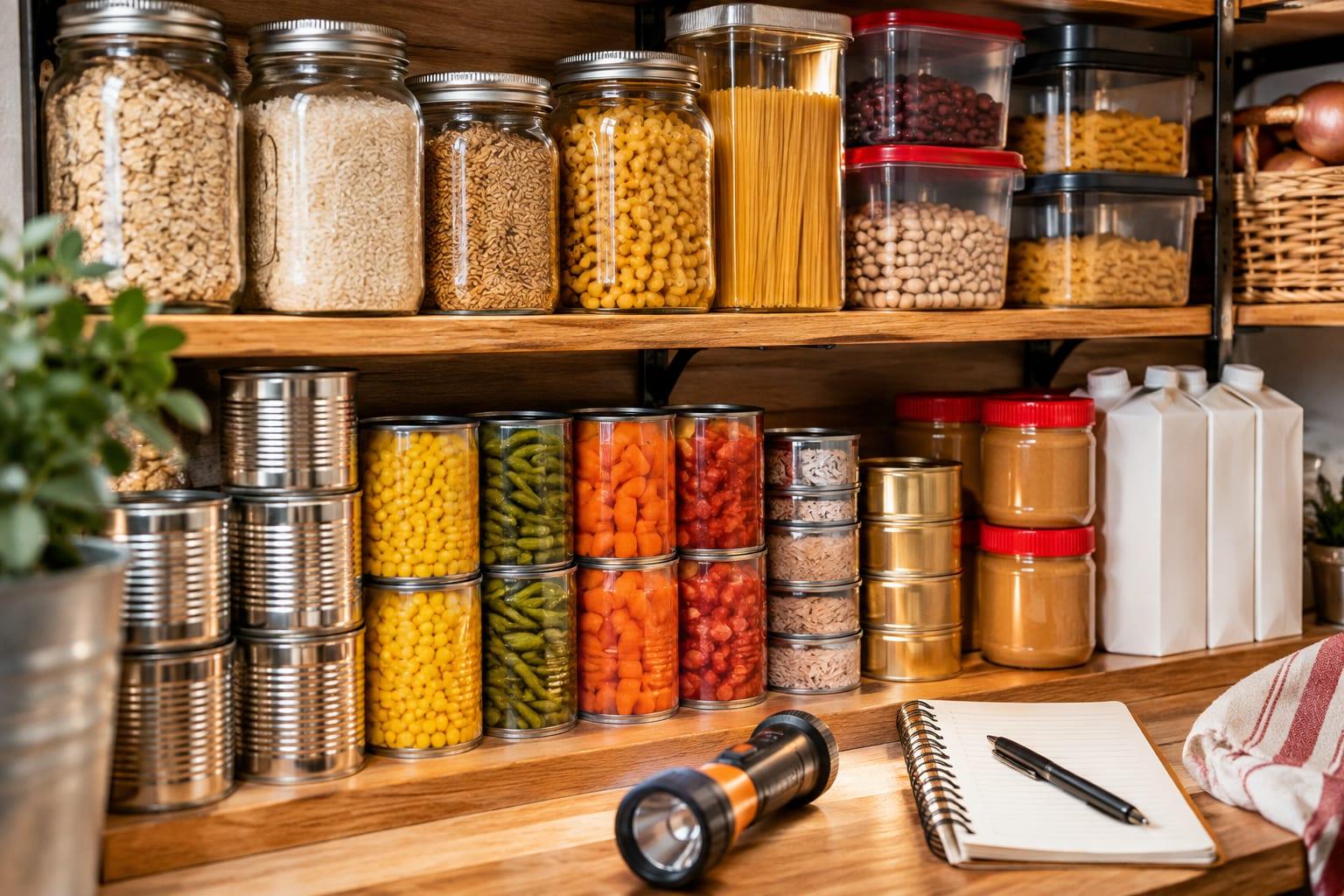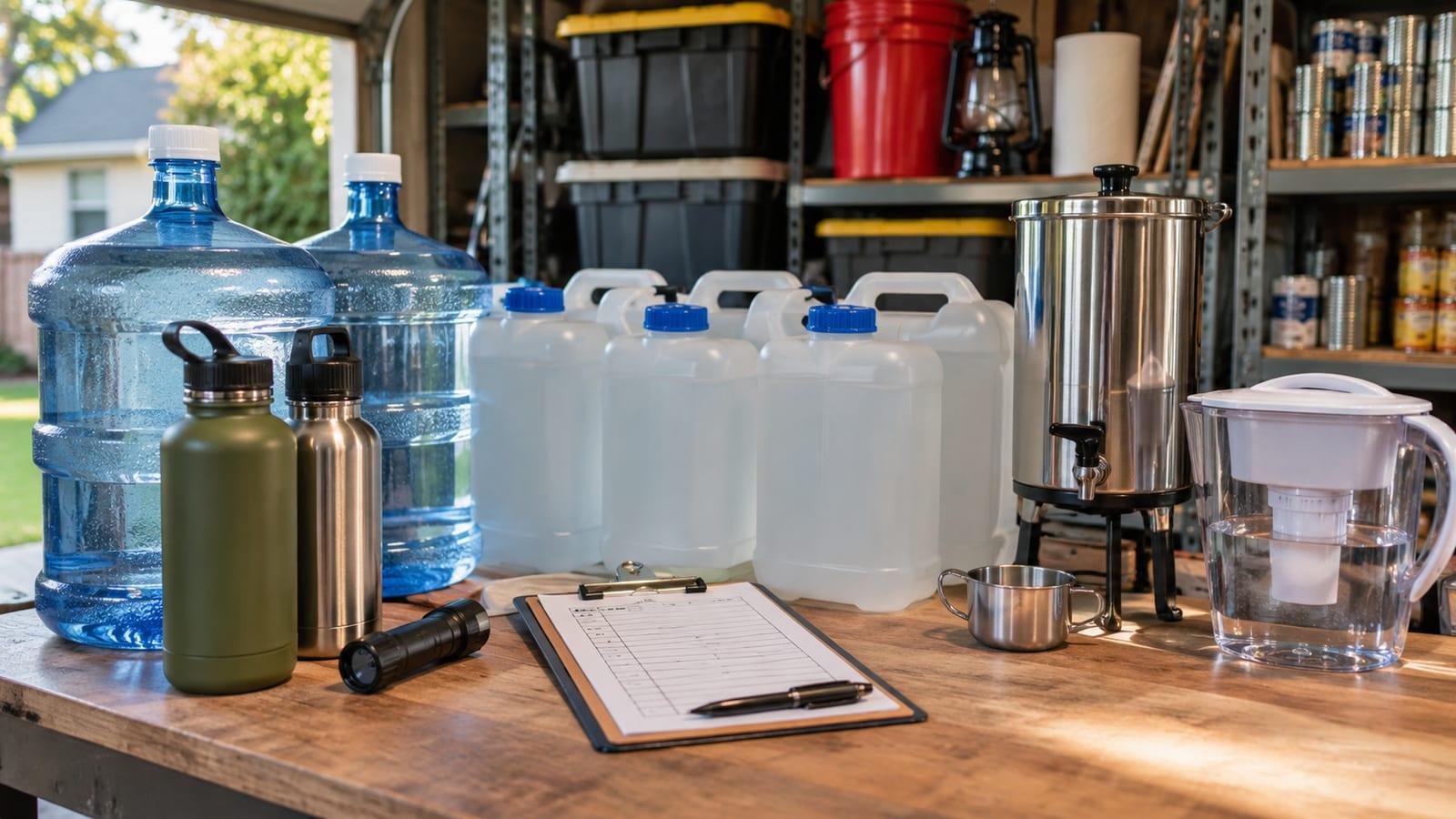
Water is the first item on Ready.gov's emergency kit list, and it is the one you can't improvise. The CDC's guidance starts from a plain fact: after an emergency, tap water may not be available, or may not be safe to use.
The good news is that the math is simple and the supplies are ordinary. This guide covers the official number, how to fit it to your household, and how to store water so it is still good when you need it.
The one-gallon guideline, and what it covers
Ready.gov's guideline is to store at least one gallon of water per person per day for several days, for drinking and sanitation.
The CDC uses the same daily figure and is more specific about the days. It says to store at least 1 gallon of water per person, per day for 3 days, and to try to store a 2-week supply if possible.
That gallon is not all for drinking. Ready.gov says a normally active person needs about three quarters of a gallon of fluid daily, from water and other beverages. The rest is for staying clean. The CDC lists the uses for stored water as drinking, cooking, brushing teeth and other uses.
So one gallon a day is a baseline for getting by. It is not enough for normal household use, such as showers or laundry.
When to store more
One gallon is the floor. Ready.gov says individual needs vary depending on age, health, physical condition, activity, diet and climate, and it lists these points to take into account:
- Children, nursing mothers and sick people may need more water.
- If you live in a warm weather climate, more water may be necessary.
- In very hot temperatures, water needs can double.
The CDC makes a similar point. It says to consider storing more for pregnant women, people who are sick, pets, or if you live in a hot climate.
Neither page gives an exact amount for these situations, and we will not guess at one. The practical step is to treat one gallon as the minimum and round up.
Work out your household number
The sum is short:
People in your home × days × 1 gallon
Here is a worked example for a household of two adults and two children.
- One day: 4 people × 1 gallon = 4 gallons.
- Three days: 4 gallons × 3 = 12 gallons.
- Two weeks: 4 gallons × 14 = 56 gallons.
Twelve gallons is a realistic first target. It is twelve one-gallon jugs, which fit on a closet floor.
Fifty-six gallons takes more space and more than one shopping trip. Ready.gov's advice is to build your emergency supply kit over time, picking up an extra item each time you go to the grocery store. A jug or two per trip gets you there.
If summer heat is a real risk where you live, remember that Ready.gov says water needs can double in very hot temperatures. Lean toward the larger number.
Add water for pets
Pets drink from the same supply, so count them. Ready.gov's kit list includes pet food and extra water for your pet, and its pet preparedness page says to store a water bowl and several days' supply of water.
For a number, the CDC's flood guidance says to store at least 1 gallon of water per day for each person and each pet.
By that rule, a dog brings the example household to 5 gallons a day. That is 15 gallons for three days and 70 gallons for two weeks.
How to store it
Buy it sealed. Ready.gov says to buy commercially bottled water and store it in the sealed original container in a cool, dark place. The CDC calls unopened, commercially bottled water the safest and most reliable source of water in an emergency.
What to look for: sealed, commercially bottled water in sizes you can lift and pour easily, with an expiration date you can read. Gallon jugs make the counting simple: one jug per person, per day.
Pick the right spot. The CDC says to keep containers in a place with a cool temperature (50°F to 70°F) and away from direct sunlight. The FDA adds that bottled water should be stored where it will be as safe as possible from flooding. An indoor closet or the floor of a pantry usually fits all three.
Filling your own containers. This can work if you are careful. Ready.gov says that if you must prepare your own containers of water, you should purchase food-grade water storage containers. The CDC says the same and gives steps for washing and sanitizing a container before you fill it. Follow the steps on the CDC's page exactly.
What to look for: containers sold as food-grade water storage, with a top that closes tightly.
When to replace it
There are two rules, one for each kind of water:
- Store-bought water: the CDC says to observe the expiration date.
- Water you bottled yourself: Ready.gov and the CDC both say to replace it every six months.
Replacing water does not mean wasting it. Use the old water for plants or cleaning, then refill or restock.
If your stored water runs out
Start with official advice. The CDC says to listen to reports from local officials for advice on water precautions in your home.
Do not try to stretch your drinking water too thin. Ready.gov says never to ration drinking water unless ordered to do so by authorities.
The CDC lists other sources of clean water that can be found inside your home. They include:
- Water from your home's tap water heater tank. This is the tank that feeds your faucets, not a home heating system tank.
- Melted ice cubes made with water that was not contaminated.
- Liquid from canned fruit and vegetables.
Some water is for washing only. The CDC says water from swimming pools and spas can be used for personal hygiene, cleaning and related uses, but not for drinking. It also says never to use water from radiators or boilers that are part of your home heating system for drinking, cooking or hygiene.
Water from outside the home, such as rainwater, streams or lakes, is a different matter. The CDC says it must be treated to kill harmful germs before use.
The simplest protection is to store enough that you never reach this step.
What to do this week
- Count the people and pets in your home, and multiply by one gallon a day.
- Buy enough sealed bottled water for three days on your next grocery trip.
- Store it somewhere cool and dark, away from gasoline, pesticides and direct sunlight.
- Write the date on each container and set a reminder to check it twice a year.
- Add a jug or two on each shopping trip until you reach two weeks.
Where to go next
- Build a 14-Day Emergency Pantry With Foods You Already Eat
- Emergency Food Storage: Canned vs. Freeze-Dried vs. Dehydrated
- The First 10 Things Every Household Should Have for an Emergency
- Emergency Preparedness for Families With Kids and Pets
Sources
- Ready.gov: Water
- Ready.gov: Build a Kit
- Ready.gov: Prepare Your Pets for Disasters
- Ready.gov: Low and No Cost Preparedness
- CDC: How to Create an Emergency Water Supply
- CDC: How to Find Clean Water in an Emergency
- CDC: How to Make Water Safe in an Emergency
- CDC: Preparing for Floods
- EPA: Emergency Disinfection of Drinking Water
- FDA: Food and Water Safety During Power Outages and Floods