Search for "emergency radio" and four different things come back: NOAA weather radios, FRS and GMRS walkie-talkies, and ham radios. They are easy to mix up, and they do very different jobs.
Two questions sort them out. Does the radio only listen, or can it talk as well? And do you need a license to use it? This guide answers both for each kind, then says which one to get first.
Listening and talking are different jobs
A receiver only listens. In most emergencies that is what a household needs: the official warning and the forecast, even if the power and the internet are down. That is the job of a weather radio.
A two-way radio listens and talks. It matters in a narrower case: your family is apart but nearby, and the phones are not working. FRS, GMRS and ham radio are all two-way, and licenses only come up for these three, because they transmit.
NOAA Weather Radio: the one that only listens
What it is for: NOAA Weather Radio is run by the National Weather Service. It is a nationwide network of radio stations that broadcasts official warnings, watches, forecasts and other hazard information 24 hours a day, 7 days a week. The network has more than 1,000 transmitters and covers all 50 states.
It is not only about weather. The National Weather Service calls it an "All Hazards" network. It also carries warnings for events such as chemical releases, AMBER alerts and 911 telephone outages.
You can't hear it on a simple AM/FM radio. You need a receiver built to pick it up.
How the alerts work: the National Weather Service describes two features on its receiver page.
- Tone alarm. A tone is sent before most warnings and many watch messages. It activates receivers equipped for it even if the audio is turned off, which the page calls especially useful for warnings during the night.
- SAME. This is short for Specific Area Message Encoding. You enter a code for your county, and the radio responds only to alerts for the area you chose.
The alarm is kept for serious events. The National Weather Service says only the most imminent life- and property-threatening hazards are broadcast with the alarm tone. Its working guideline is a hazard urgent enough to warrant waking people up in the middle of the night.
Will it reach you? The same page says a transmitter's coverage typically extends to about 40 miles on level terrain, and that hills and mountains reduce it. You can check your own address with the station search tool.
License: none. A weather radio only receives, and the National Weather Service provides the broadcasts as a public service.
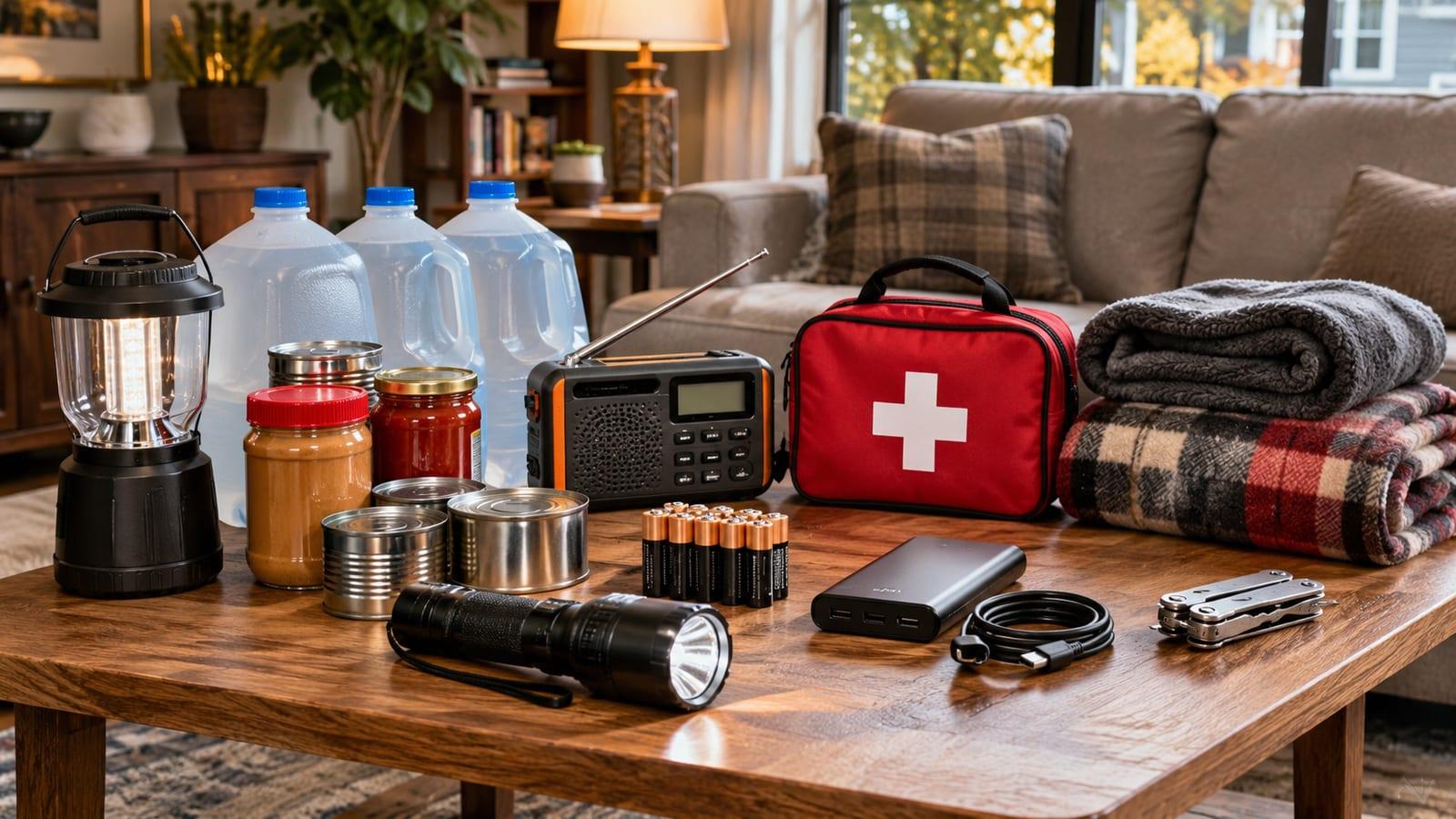
Who it suits: every household. Ready.gov's basic emergency supply kit lists a battery-powered or hand-crank radio and a NOAA Weather Radio with tone alert.
What to look for: a tone alarm, SAME and battery backup. The National Weather Service does not endorse a make or model, but it does recommend looking for the Public Alert logo or the NOAA Weather Radio All Hazards logo. Some receivers have a jack for an external antenna, or for notification devices such as strobe lights or bed shakers. Prices range from around $20 to over $100, depending on features.
FRS: two-way radios with no license
What it is for: FRS stands for Family Radio Service. The FCC, the federal agency that regulates radio, describes it as a short-distance, two-way service for family and group activities. In practice that means small handheld radios, similar to walkie-talkies.
License: none to apply for. The FCC says FRS is "licensed by rule", which means an individual license is not required as long as you comply with the rules. You may operate an FRS radio regardless of your age.
The rules in brief: there are 22 FRS channels, shared by everyone, and the FCC expects people to listen before they talk. An FRS radio must be certified by the FCC and may not be modified.
How far it reaches: not far. The FCC says the usual range on channels 8 to 14 is less than one-half mile, and that longer range can be achieved on the other channels depending on conditions. "Short-distance" is the FCC's own description, and it is the one to plan around.
Who it suits: families who want to stay in touch around the neighborhood or on a group outing.
What to look for: radios sold as FRS, so the license question never comes up. Pick a pair that runs on a battery size you already stock, and try them around your own streets before you rely on them.
GMRS: more capability, with a license
What it is for: GMRS stands for General Mobile Radio Service. It shares channels with FRS, but the FCC describes a wider set of equipment: hand-held radios, mobile radios and repeater systems. A repeater is a station that retransmits a signal so that it covers more ground.
License: required. The FCC's page sets out the basics:
- You must be 18 or older to apply.
- Once you hold a license, any family member, regardless of age, can operate under it.
- A license is issued for a ten-year term.
The FCC's fee guide, effective May 23, 2025, lists a $35 application fee for a new GMRS license.
How far it reaches: the FCC says a GMRS user can expect a range of one to twenty-five miles, depending on station class, terrain and repeater use. That is a wide spread, so don't count on the top of it.
Check the box: some radios were sold as combined FRS and GMRS models. The FCC says that if such a radio goes beyond the FRS channels and power limits, it is a GMRS device, and you need a license to use it beyond those limits.
Who it suits: a household that has tried FRS, wants more reach, and is willing to pay the fee and follow the rules.
Ham radio: the longest reach, with an exam
What it is for: "ham" is the everyday name for amateur radio. The FCC describes the amateur service as being for people of any age who are interested in radio for personal reasons and not for money. Amateur operators in all areas of the world talk to each other directly, through relay systems and through satellites.
License: required, and each operator must have one. Before the FCC grants a license, you must pass an examination given by a team of volunteer examiners in your community. The FCC says most new operators start at the Technician Class and may then advance to the General Class or Amateur Extra Class.
The FCC notes that study guides and training courses are widely available. Its fee guide lists a $35 application fee for a new amateur license.
Who it suits: someone in the household who wants a hobby and is happy to study for it. It is the least suited of the four to a first purchase.
What a beginner household should get first
Get a NOAA Weather Radio receiver with a tone alarm, SAME and battery backup.
It is the only one of the four on Ready.gov's basic kit list, and it needs no license. It also does the job a household needs first: hearing an official warning when the power is out or everyone is asleep.
After that, go in this order, and stop wherever your needs are met:
- A pair of FRS radios, if you want a way to talk across a short distance.
- A GMRS license, if FRS turns out to be too limited for where you live.
- A ham license, if someone in the family gets interested in radio itself.
Two-way radios support a family plan. They don't replace one. Decide who contacts whom and where you will meet first, using our guide to a family emergency communication plan.
Set up your weather radio
- Look up the stations near your address with the National Weather Service station search.
- Choose a receiver with a tone alarm, SAME and battery backup.
- Enter your county code using the manual that came with the radio.
- Put in backup batteries and leave the radio plugged in.
- Talk as a household about whether you need two-way radios at all.
Where to go next
- Build a Basic Family Emergency Communication Plan
- The First 10 Things Every Household Should Have for an Emergency
- What Stops Working in Your House When the Power Goes Out?
- Best Beginner Backup Power Options: Power Banks, Stations, and Generators
Sources
- National Weather Service: NOAA Weather Radio
- National Weather Service: NOAA Weather Radio receivers
- National Weather Service: NOAA Weather Radio alarms
- National Weather Service: NOAA Weather Radio station search
- FCC: Family Radio Service (FRS)
- FCC: General Mobile Radio Service (GMRS)
- FCC: Amateur Radio Service
- FCC: Personal Service and Amateur Application Fees
- Ready.gov: Build a Kit