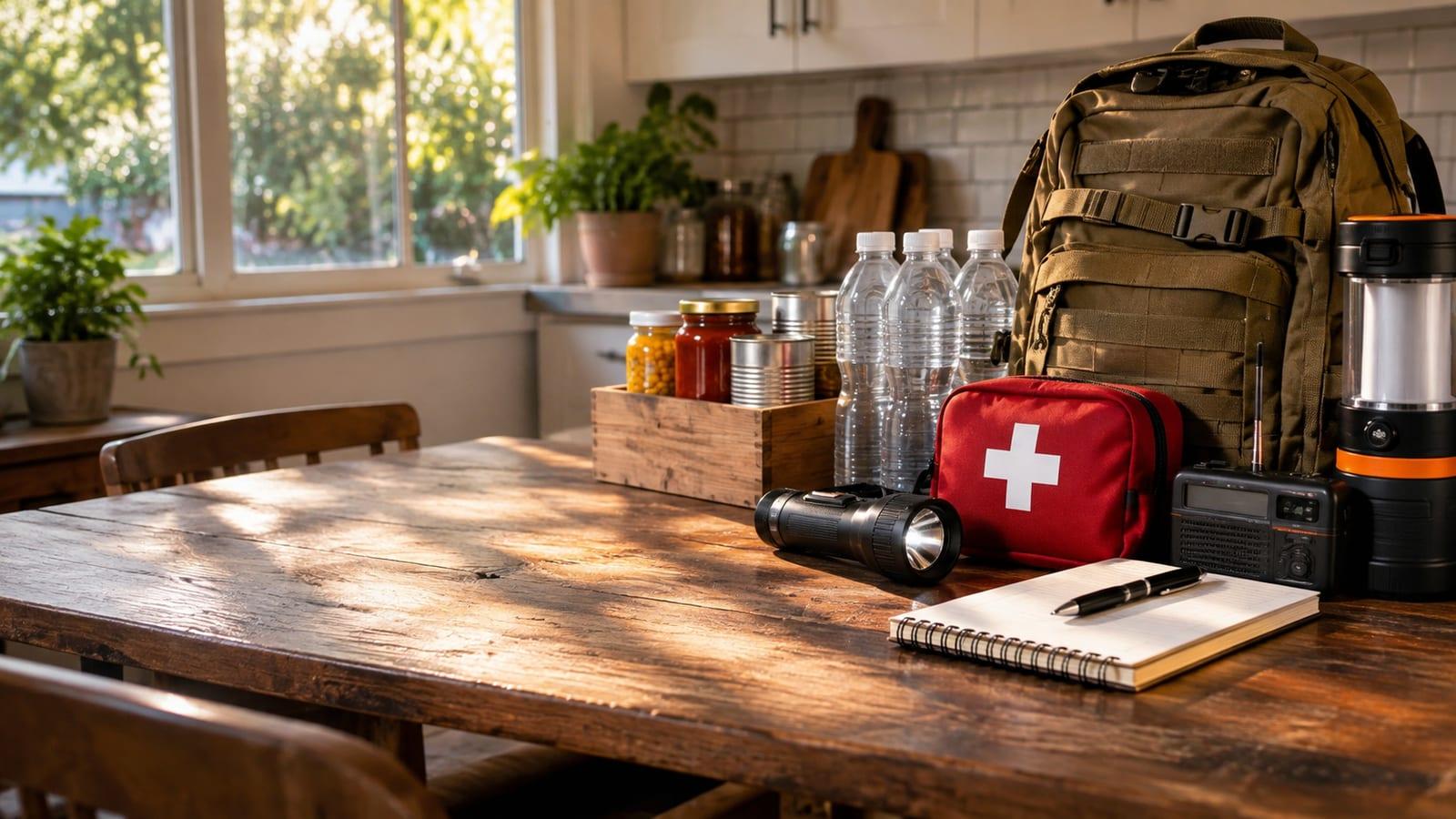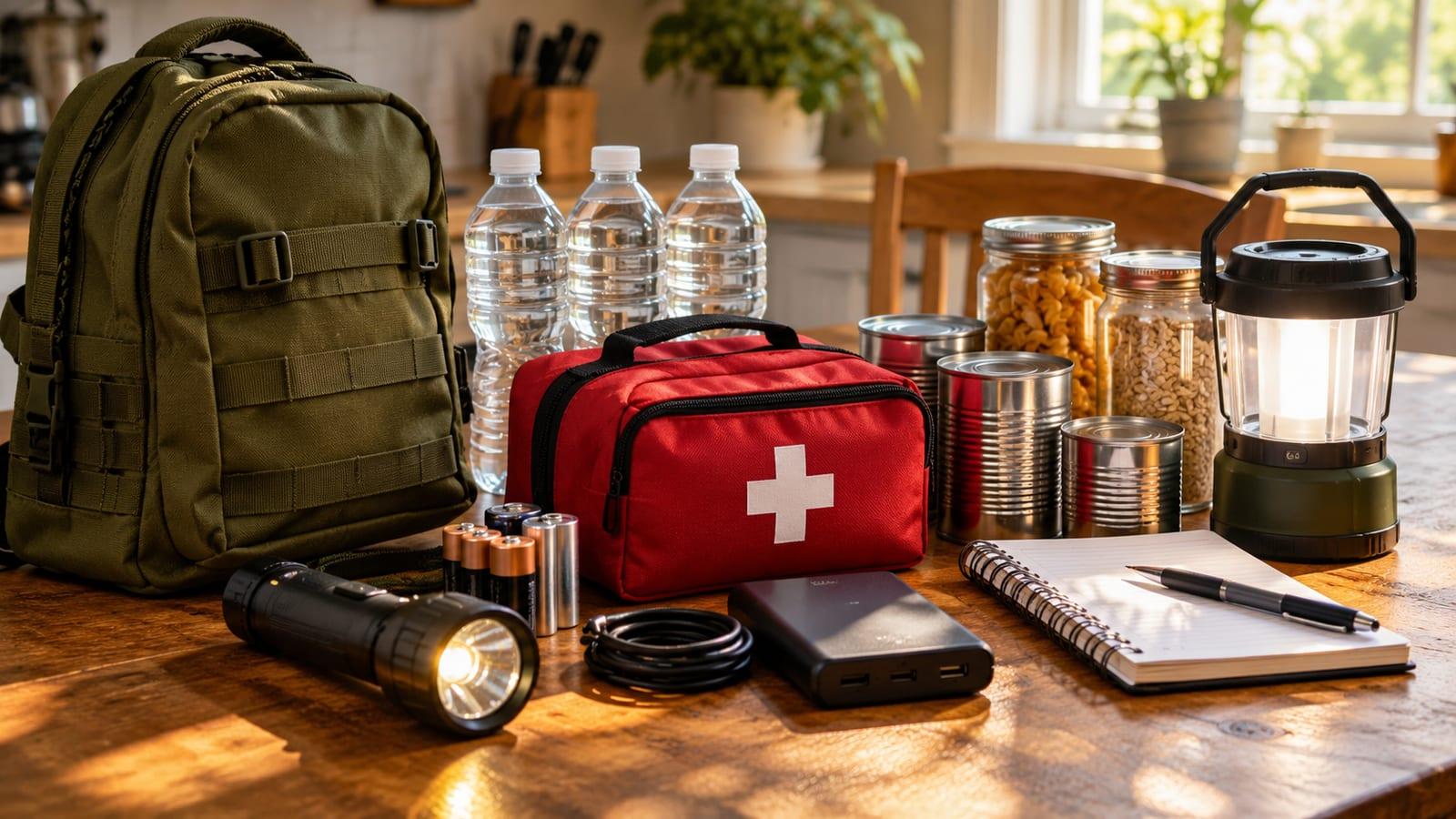
This guide is about the kit itself: what an official list says goes in one, how to choose between buying and building, where to keep it, and how to keep it stocked.
It does not explain how to treat an injury or illness, and it does not cover medicines. For those, take a class from a training organization and talk to your own doctor or pharmacist. In an emergency, call 911.
Why keep a kit at home
A first aid kit is one of the items on Ready.gov's basic emergency supply kit list, alongside water, food, a flashlight and a radio.
The point of a kit is mostly organization. You may already own some supplies, spread across a bathroom cabinet, a kitchen drawer and the car. MedlinePlus, a federal government health information site, gives the reason to gather them: keep all of your supplies in one location so you know exactly where they are when you need them.
What an official list includes
MedlinePlus publishes a list of basic supplies for a home first aid kit, and says you can get most of them at a pharmacy or supermarket. The list comes in three groups: bandages and dressings, home health equipment, and medicines.
These items are from the first two groups, with brand names left out:
- Adhesive bandages in assorted sizes
- Elastic bandage
- Sterile gauze pads, non-stick gauze and adhesive tape
- Triangular bandage
- Latex or non-latex gloves
- Face mask
- Disposable instant ice bags
- Sterile cotton balls and cotton-tipped swabs
- Tweezers
- Hand sanitizer
- First-aid manual
That is not the whole list. MedlinePlus names several other pieces of equipment, and its third group covers medicines. We have left those out because this site does not give medical advice. Read the full list on MedlinePlus, and ask your doctor or pharmacist about anything on it.
Ready.gov's longer supply list also includes prescription and non-prescription medications among the things to consider based on your individual needs. Which of those belong in your home is a question for your doctor or pharmacist.
MedlinePlus adds that other supplies may be included in a kit, depending on the area in which you plan to spend time.
Buy a kit or build one
Both work. The choice comes down to time and what you already own.
A store-bought kit is quick. It comes in its own case, and everything starts out in one place. Don't assume it matches the official list. Open it, compare it with the list, and note what is missing.
A kit you assemble takes a shopping trip and a container. It lets you start with supplies you already have, so you only buy the gaps.
A mix of the two is often the easiest: a basic store-bought kit, checked against the list, with a few additions.
What to look for: a case that closes properly and is easy to carry. A printed contents list, so you can see what is inside before you buy. Clear compartments or pouches, so things are easy to find. Spare room for the items you add. Packaging with dates you can read.
Where to keep it
Ready.gov's advice for a home emergency kit applies here too: keep it in a designated place, and make sure all family members know where it is kept.
Some things to think about when you pick the spot:
- Pick one place and keep to it. A kit that moves around is hard to find in a hurry.
- Choose somewhere adults can reach quickly. A hallway closet shelf is one option.
- Tell the people who look after your home. That includes babysitters and visiting relatives. This one is our suggestion.
- Consider a second kit. Ready.gov suggests preparing supplies for work and the car as well as home.
Check it and restock it
A kit runs down in two ways. Things get used, and things expire.
MedlinePlus says to check your kit regularly and replace any supplies that are getting low or have expired. Ready.gov says much the same about emergency kits in general: replace expired items as needed, and re-think your needs every year as your family's needs change.
A simple routine covers it:
- Check on a set date. Use the same date you check the rest of your emergency supplies.
- Read the dates. Replace anything that has expired.
- Count what is left. Top up whatever is running low.
- Compare with the list again. Your household may have changed since last time.
Learn to use it: first aid training
Supplies are only useful to someone who knows what to do with them. That is a job for a class, not for a website.
Ready.gov's Safety Skills page is direct about it: take a first aid and CPR class. It says you can get more information about training from your local American Red Cross chapter.
There is also a wider option. FEMA's Community Emergency Response Team program, known as CERT, educates volunteers about disaster preparedness and trains them in basic disaster response skills. FEMA says there are CERT programs in all 50 states.
The MedlinePlus list includes a first-aid manual. Keep one in the kit.
What to do this week
- Gather the first aid supplies you already own into one place.
- Compare what you have with the MedlinePlus list and write down the gaps.
- Choose a case that closes properly, and label it.
- Tell everyone in the house where the kit is kept.
- Set a date to check the kit, and put it on your calendar.
- Ask your local American Red Cross chapter about a first aid class.
Where to go next
- The First 10 Things Every Household Should Have for an Emergency
- 72-Hour Emergency Bags: What Beginners Really Need
- Emergency Preparedness for Families With Kids and Pets
- Build a Basic Family Emergency Communication Plan
- How to Start Prepping on $25, $50, or $100 a Month